The battle against Hospital-Acquired Infections (HAIs) and the growing threat of Antimicrobial Resistance (AMR) is entering a new, technology-driven era. As we look towards 2026, the focus of infection control is shifting from reactive clean-up to proactive, intelligent prevention. For hospital administrators and infection control leaders in India and around the globe, staying ahead of the curve is no longer an option—it’s a necessity.
Here are the five key trends that will define the future of hospital infection control.
1. Beyond Coatings: The Rise of Active Antimicrobial Surfaces
For years, antimicrobial coatings have been the standard. The future lies in surfaces made from materials that are intrinsically and continuously antimicrobial.
This trend moves beyond temporary chemical layers to incorporate materials science directly into the hospital environment. Expect to see a surge in the use of solid copper alloys and copper-infused polymers for high-touch surfaces like bed rails, door handles, and IV poles. These materials actively kill pathogens on contact, 24/7, without human intervention. Furthermore, advancements in nanotechnology are bringing self-disinfecting surfaces activated by light and micro-patterned materials that physically prevent bacteria from adhering. For administrators, this means turning the very infrastructure of the hospital into a passive, always-on infection control system.
2. AI-Powered Predictive Surveillance
Data is the new frontline in infection prevention. By 2026, the use of Artificial Intelligence (AI) to predict outbreaks before they begin will become a critical tool. AI platforms will integrate real-time data from a hospital’s electronic health records, pharmacy dispensing logs, and microbiology lab results. By identifying subtle patterns, these systems can flag at-risk patients or departments for potential outbreaks of infections like C. difficile or MRSA days before they would be detected by traditional methods. This allows infection control teams to intervene proactively, saving lives and significantly reducing the associated costs of an outbreak.
3. Advanced & Automated Decontamination Tech
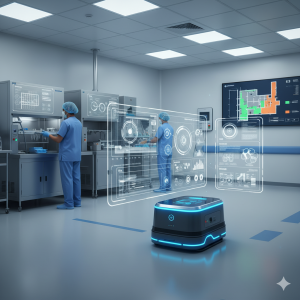
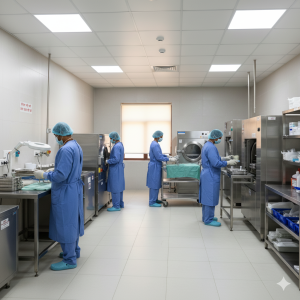
The Central Sterile Services Department (CSSD) is becoming smarter and faster. While the autoclave remains a workhorse, it will be supplemented by a new generation of decontamination technology. UV-C disinfection robots are already becoming standard for terminal cleaning of operating rooms and patient rooms, ensuring a higher level of disinfection in less time. For delicate and complex instruments, Vaporized Hydrogen Peroxide (VHP) sterilization offers a low-temperature alternative that is both highly effective and safe for sensitive electronics, a crucial capability as medical devices become more complex.
4. The Internet of Medical Things (IoMT) for Compliance
How can you be sure a piece of equipment was properly sterilized? In 2026, the equipment will tell you itself. The Internet of Medical Things (IoMT) is embedding smart sensors and connectivity into everything from infusion pumps to endoscopes. These devices can automatically log their usage, location, and decontamination history, creating a perfect, auditable digital record. This automated tracking removes the potential for human error in logging, ensures compliance with sterilization protocols, and provides administrators with a powerful tool for asset management and quality control.
5. Antimicrobial Stewardship Integrated into Procurement
Antimicrobial Stewardship (AMS)—the effort to use antibiotics responsibly to combat AMR—is moving beyond the pharmacy and into the procurement office. Given the acute challenge of antimicrobial resistance in India, this trend is particularly vital. By 2026, leading hospitals will have procurement policies that favor medical devices and high-quality instruments designed to minimize the risk of infection. This means selecting instruments that are easier to clean and sterilize, and investing in diagnostic tools that allow for rapid identification of pathogens. This ensures that expensive, last-line antibiotics are only used when absolutely necessary, aligning the hospital’s financial decisions with its most critical clinical and public health goals.
Of course, integrating these advanced technologies is not without its challenges, requiring careful planning, investment, and training. The key is to build a strategy that phases in these innovations in a way that is both financially sound and operationally effective, ensuring that every step forward enhances patient safety without disrupting care.
Navigating these advancements requires a strategic partner who understands both the technology of tomorrow and the realities of today’s hospitals.Is your facility ready to meet the future of infection control? Contact Imperial Surgical’s expert consultants to discuss a roadmap for future-proofing your hospital.